
Protecting insuredrights since 1979
California Unum Disability Denial Lawyer
Free ConsultationIf Unum denied or terminated your long-term disability benefits in California, start by finding out which law governs your policy. Individually purchased and other non-ERISA disability policies fall under California insurance law, where an unreasonable denial can support a bad-faith claim. Most private-employer group plans fall under federal ERISA, which limits remedies.
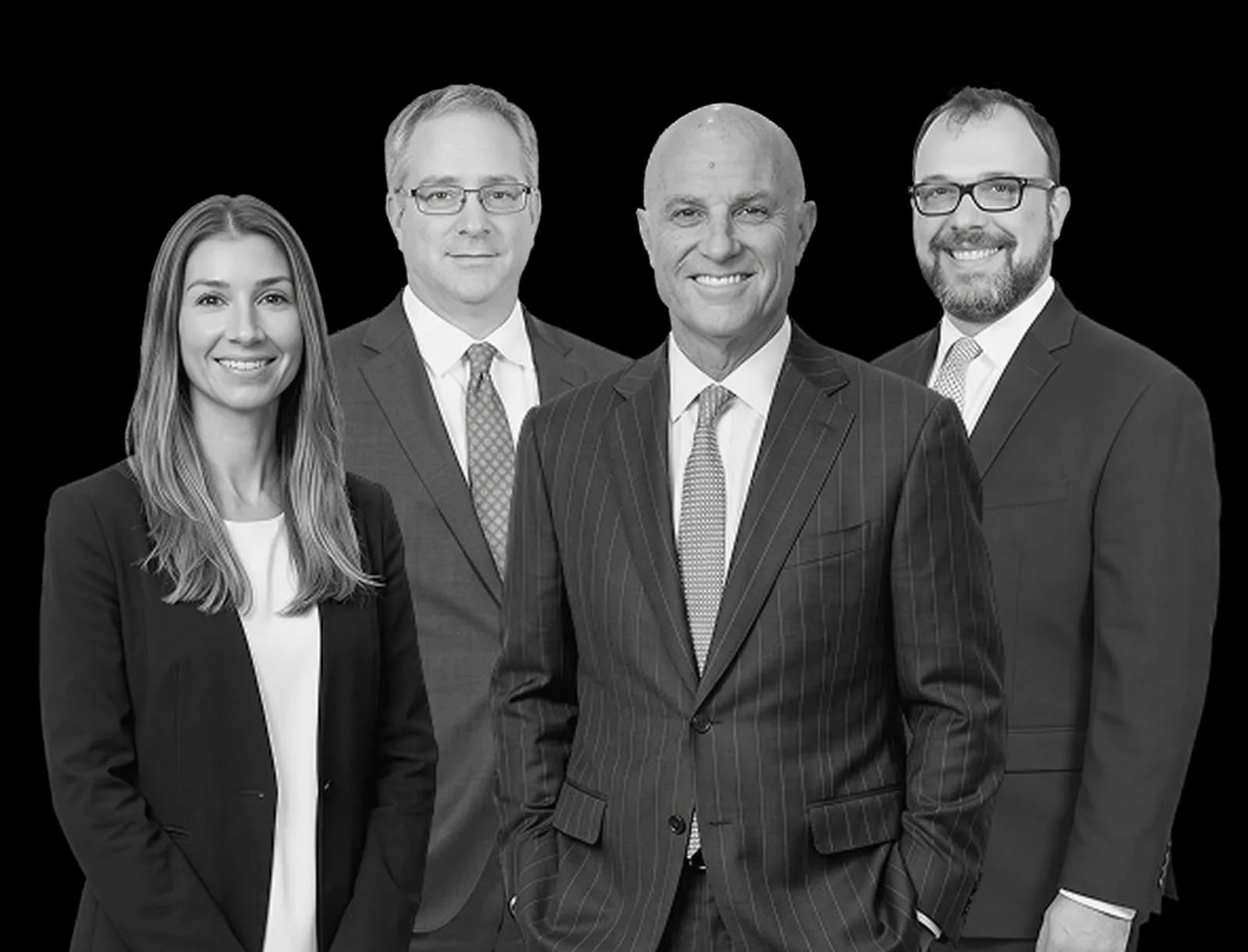
Gianelli & Morris has 40+ years serving California policyholders. Partner Robert S. Gianelli has represented people in disputes involving health, life, disability, and property insurance. This page covers four things: how an Unum LTD denial is evaluated under California law, which Unum policies our firm can take on, what Unum's stated reasons usually mean, and what to gather now. It is part of our broader long-term disability insurance claim denial practice.
Robert Gianelli is a Los Angeles insurance lawyer. He takes on disability insurers that deny or cut off benefits owed under individual and other non-ERISA policies. Gianelli & Morris has recovered hundreds of millions of dollars for policyholders. We take insurance bad faith cases on a contingency fee basis, which means our fees are taken as a percentage of any award we recover. If your Unum coverage came through a private employer, we'll tell you on the first call so you can look for ERISA counsel without losing time. Call 213-489-1600 for a free consultation to discuss your legal options.
Key Takeaways
- California Insurance Code § 10110.6 voids any provision in a life or disability policy covering a California resident that reserves discretionary authority to the insurer to decide eligibility or interpret the policy.
- California courts generally apply a two-year period (Code Civ. Proc. § 339(1)) to bad-faith claims and a four-year period (§ 337(a)) to claims on the written policy. The period commonly runs from the insurer's unequivocal denial, but policy terms, accrual, and tolling can shorten or shift it.
- Insurance Code § 790.03(h) lists unfair claims practices, but it gives policyholders no private right to sue (Moradi-Shalal v. Fireman's Fund). The lawsuit itself is a common-law bad-faith claim.
- Under ERISA, recovery is generally limited to the benefit plus potential interest, attorney fees, and appropriate equitable relief. Gianelli & Morris does not handle ERISA-governed cases.
- Disability plans sponsored by government employers and churches are generally exempt from ERISA. Their members generally keep California bad-faith remedies against the insurer.
Which Unum Disability Policies Does Gianelli & Morris Review in California?
Under California law, the source of your Unum coverage decides which rules apply to the denial. ERISA preempts state laws that relate to private-employer benefit plans (29 U.S.C. § 1144), and in Pilot Life Ins. Co. v. Dedeaux (1987) the U.S. Supreme Court held that state common-law bad-faith claims are preempted for those plans. Later Supreme Court decisions narrowed parts of that reasoning, and coverage outside ERISA follows California law. Gianelli & Morris evaluates selected Unum disputes under individual and other qualifying non-ERISA policies. We do not handle ERISA-governed employee benefit cases.
Unum issues both group and individual disability coverage. The same company name can sit on very different kinds of contracts, and the denial letter alone often won't tell you which kind you have.
Individual Unum policies you bought yourself
An individual disability policy is one you applied for and paid for yourself, sometimes through an agent or broker. These policies are generally governed by California insurance law. If Unum's denial was unreasonable, you may be able to bring a claim for breach of the policy and a tort claim for bad faith.
Many physicians, dentists, and other professionals carry individual policies with own-occupation definitions. If that's you, our page on how disability is defined for physicians explains why the occupation definition carries so much weight.
Group LTD coverage through a private employer
Group long-term disability coverage through a private employer is usually an employee benefit plan under ERISA. That is a federal category covering benefits an employer establishes or maintains for its workers. When ERISA applies, the remedies change sharply. There is generally no bad-faith tort, no punitive damages, and no emotional-distress damages. Recovery is generally limited to the benefit plus potential interest, attorney fees in the court's discretion under 29 U.S.C. § 1132(g), and appropriate equitable relief under § 1132(a)(3).
We don't take these cases. The U.S. Department of Labor (EBSA) publishes consumer information on ERISA claims and appeals for people in this position.
Government and church employer plans
Plans sponsored by government employers and churches are generally exempt from ERISA. That group includes teachers, police officers, firefighters, other public employees, and religious workers. Their members generally keep California bad-faith remedies against the insurer, although plan structure and the identity of the defendant can matter. Our page on how public employee insurance denials are different covers this in more depth.
| How you got your Unum coverage | Law that generally governs | Remedies generally available | How Gianelli & Morris handles it |
|---|---|---|---|
| Individual policy you applied for and paid for yourself | California insurance law | Policy benefits; bad-faith tort damages if the denial was unreasonable; Brandt fees; punitive damages only on clear and convincing evidence of oppression, fraud, or malice | We evaluate selected cases at a free consultation |
| Group LTD plan through a private employer | ERISA (29 U.S.C. §§ 1132, 1144) | Generally the benefit plus potential interest, attorney fees in the court's discretion, and appropriate equitable relief; no bad-faith tort, punitive, or emotional-distress damages | We do not handle ERISA cases; we tell you early so you can find other counsel |
| Group plan through a government employer (state, county, city, school district) | Generally exempt from ERISA; California law | Generally retains California bad-faith remedies against the insurer, depending on plan structure and defendant | We evaluate selected cases at a free consultation |
| Group plan through a church or religious employer | Generally exempt from ERISA; California law | Generally retains California bad-faith remedies against the insurer, depending on plan structure and defendant | We evaluate selected cases at a free consultation |
| Coverage through an association, payroll deduction, or a converted group policy | Depends on who sponsored and paid for the coverage | Decided by the policy documents and premium records | Sorted out in the first step of our review |
That last row is where the most confusion happens. A policy you pay for through payroll deduction may or may not be part of an employer plan. The answer usually turns on documents you may already have, which is why the first conversation focuses on paperwork.
What Does It Cost to Challenge an Unum LTD Denial in Los Angeles?
For California bad-faith cases against a disability insurer, Gianelli & Morris works on contingency. Our fees are taken as a percentage of any award we recover, so for a bad-faith claim there is no fee unless we recover. The first conversation is a free consultation, where we discuss your Unum paperwork and explain what we see.
Some practical points about cost:
- The consultation is free. It covers your policy, the denial, and whether California law or ERISA likely governs.
- The contingency arrangement applies to insurance bad-faith cases. If your matter turns out to be a different type, we explain the fee arrangement at the consultation rather than assume.
- Attorney fees and case expenses are different things. Ask us how litigation expenses are handled in your matter, and we'll walk through it before you sign anything.
California law also has a fee rule specific to bad faith. Brandt fees are the attorney fees a policyholder reasonably incurs to force the insurer to pay benefits it tortiously withheld. In Brandt v. Superior Court (1985) 37 Cal.3d 813, a case that arose from a denial of disability benefits, the California Supreme Court held those fees recoverable as damages. Fees spent pursuing the bad-faith claim itself are not recoverable that way. The rule doesn't make a case free. But it can matter when a denial is later found to have been unreasonable.
Why Did Unum Deny or Terminate My Disability Claim?
California's Fair Claims Settlement Practices Regulations require a disability insurer to conduct a thorough, fair, and objective investigation. They also require a written first-party denial that states every basis for the decision, with its factual and legal grounds. So the denial or termination letter should tell you exactly why Unum stopped paying. If it doesn't, that gap is itself worth examining. Our article on why proper claim denial notices matter explains what a compliant letter looks like.
The reasons below appear in long-term disability denials generally. Your letter controls, and some letters cite more than one.
The definition switched from "own occupation" to "any occupation"
Own occupation means the policy pays if you can't perform the material duties of your own job. Any occupation means the policy pays only if you can't perform any job you're reasonably suited for by education, training, or experience. Many policies use the first definition for an initial period and then shift to the second.
A termination letter that arrives around that changeover deserves a close read. Your medical condition may not have changed at all. What changed is the question the insurer is asking.
An independent medical exam or "paper review" disagreed with your doctors
An independent medical examination (IME) is an exam by a doctor the insurer selects. A paper review, or records review, is a reviewer's opinion formed from your file without examining you. Either one can conflict with your treating physician's opinion.
Under Wilson v. 21st Century Ins. Co. (2007) 42 Cal.4th 713, a jury may find bad faith when an insurer reaches a medical conclusion without fairly investigating and disregards the treating physician's evidence. That doesn't mean every reviewer opinion is improper. It means the reviewer's work gets tested. Did the reviewer see the full records, examine you, and apply the policy's actual definition of disability?
Surveillance or social media suggested you can do more
Some terminations follow a surveillance report or a review of social media posts. A few minutes of video showing you carrying groceries or walking a dog says little about whether you can do your job for a full workday, every day. The question is whether the insurer weighed that footage fairly against the whole medical record or treated it as the answer.
A limited-condition provision, exclusion, or offset applied
Some disability policies cap benefits for certain conditions, such as mental health conditions, at a set period. Many also reduce the monthly benefit by other income. An offset is a reduction of your disability benefit by money you receive from another source, such as Social Security disability benefits, when the policy allows it. Disputes here often come down to policy wording and arithmetic, and both can be checked.
Unum claimed you misstated something on your application
Rescission means the insurer treats the policy as if it never existed, usually based on an alleged misstatement or omission in the application. The California Insurance Code's concealment and misrepresentation provisions are the statutory grounds insurers rely on for rescission. Because the rule turns on whether a misstatement was material, the central question is whether the answer actually mattered to the underwriting decision.
But there's a catch. Rescission disputes move the case away from your medical records and into the underwriting file, which you won't have unless someone asks for it.
How Do We Review a Denied Unum Claim? Promise, File, Proof
Here is the six-step sequence we use to evaluate a denied or terminated Unum claim under an individual or other qualifying non-ERISA policy. It starts by confirming that California law governs, then reads what the policy promised, rebuilds what Unum did, and tests the denial against the medical and vocational evidence. Those findings decide whether the right path is a demand letter, a suit for benefits, or a suit that also alleges bad faith.
| Step | The question we answer | Documents we use | What the answer decides |
|---|---|---|---|
| 1. Confirm which law governs the policy | Is this an individual or non-ERISA policy under California law, or an ERISA employer plan? | Policy or certificate, application, premium payment records, any plan document or summary plan description | ERISA plans are referred out promptly; non-ERISA policies move to a California contract and bad-faith analysis |
| 2. Read exactly what the policy promised | Which definition of disability, elimination period, offsets, exclusions, or rescission theory applies? | Full policy with riders and amendments, signed application, underwriting file | Sets what the medical and vocational proof must show, or shifts focus to the application if rescission is claimed |
| 3. Rebuild what the insurer actually did | What did Unum review, what did it overlook, and do its stated reasons hold together? | Denial and termination letters, complete claim file and notes, IME, paper-review, and surveillance reports, correspondence log | Gaps or shifting reasons point toward bad faith; a thorough, well-explained denial points toward a focused benefits dispute |
| 4. Test the medical and vocational proof | Did Unum's reviewers examine you, see the full records, and apply the policy's real definition? | Treating physician records and opinions, functional capacity evaluations, job description, vocational analysis | Strong treating evidence Unum never fairly confronted weakens a "genuine dispute" defense; thin evidence calls for developing more proof first |
| 5. Measure the conduct against California standards | Does the record show unfair claims practices, and could it support punitive damages? | Claim-handling guidelines produced in the case, reviewer and adjuster communications, claim file timeline | Whether to plead bad faith only or also develop a punitive damages theory, which shapes discovery and case value |
| 6. Choose the path and protect the deadlines | Demand, suit for breach of the policy, or suit that adds bad faith? | Denial date records, the policy's suit-limitation clause, damages and benefits calculation | Weighs the strength of the proof, available remedies, and the earliest applicable deadline |
Steps one and two: governing law and the policy's actual words
Step one runs first because everything else depends on it. Once we know California law applies, Cal. Ins. Code § 10110.6 becomes relevant. It voids any provision in a life or disability policy covering a California resident that reserves discretionary authority to the insurer to determine eligibility or interpret the policy. A discretionary clause is policy language saying the insurer's reading of the contract gets deference. Insurers use that language to argue for a more forgiving standard of review, and in California such clauses are unenforceable. That holds whichever path a case takes, which makes it useful for any Unum policyholder in the state to know about.
Step two is slower than people expect. The elimination period is the waiting period after disability begins and before benefits start. It interacts with the occupation definitions, the offset terms, and any riders in ways that can change the answer. We read the whole policy, not the excerpt quoted in the letter.
Steps three and four: the file and the proof
In Egan v. Mutual of Omaha Ins. Co. (1979) 24 Cal.3d 809, the California Supreme Court held that an insurer may not deny a claim without thoroughly investigating its basis. There, the insurer declined the insured's offer of a medical examination before denying disability benefits, and that failure breached the implied covenant. Reconstructing Unum's timeline is how we test that standard. We look at what Unum asked for, what it received, and what it never looked at.
Step four puts the treating doctors' opinions, functional limitations, and real job demands next to the insurer's reviewers. Where the job requires sustained concentration, long shifts, or physical tasks the records rule out, the vocational evidence often carries as much weight as the medical evidence.
Steps five and six: standards, path, and timing
Punitive damages in California require clear and convincing evidence of oppression, fraud, or malice under the state's punitive damages statute. That's a high bar, so we decide early whether the insurer's own records can meet it. Step six weighs everything against the earliest deadline that could apply.
This is the sequence we use for evaluation, not a promise about results. Outcomes depend on the policy, the medical record, and the insurer's conduct.
If you'd like this review applied to your own denial letter and policy, call 213-489-1600 for a free consultation. Bring the denial or termination letter and whatever policy documents you have.
What Makes an Unum Denial Bad Faith Under California Law?
In California, every insurance policy carries an implied covenant of good faith and fair dealing: a promise the law reads into the contract that the insurer won't unreasonably withhold benefits owed under it. An Unum denial becomes bad faith under California law when Unum withholds benefits unreasonably or without proper cause, for example by denying without a thorough investigation (Egan) or by disregarding the treating physician's evidence without a fair investigation (Wilson). A denial can be wrong without being bad faith. A wrong denial gives you a contract claim for the benefits. Bad faith adds tort remedies.
Does a "genuine dispute" protect Unum?
Is a disagreement between doctors enough to defeat a bad-faith claim? Not automatically. Under Wilson, the "genuine dispute" defense protects an insurer only when its position rests on a reasonable, good-faith investigation. If Unum's reviewer never addressed the treating physician's findings, or reviewed an incomplete file, the dispute may not be "genuine" in the legal sense.
Where Insurance Code § 790.03 fits
Cal. Ins. Code § 790.03(h) lists unfair claims settlement practices. They include misrepresenting pertinent facts or policy provisions, failing to adopt reasonable standards for prompt investigation, and failing to promptly give a reasonable explanation of the basis for a denial. The statute gives policyholders no private right to sue. Under Moradi-Shalal v. Fireman's Fund Ins. Cos. (1988) 46 Cal.3d 287, enforcement belongs to the Insurance Commissioner. Its standards still serve as evidence of what reasonable claims handling looks like, and the lawsuit itself is the common-law bad-faith claim. Our page on California Insurance Code 790.03 and bad faith goes deeper.
You can also bring a complaint about claim handling to the regulator through the Department of Insurance consumer help resources. A regulatory complaint is separate from a lawsuit and doesn't replace one.
A hypothetical to make it concrete
Consider a hypothetical. An orthopedic surgeon with an individual own-occupation policy develops a hand tremor. Her neurologist documents that she can't safely operate. The insurer's paper reviewer, who never examined her, writes that she "retains full upper-extremity function" and that she could teach or consult.
That reviewer may have answered the wrong question. Under an own-occupation definition, the issue is whether she can perform the material duties of surgery, not whether she can work at all. A denial built on the any-occupation question, under a policy that promises own-occupation coverage, is the kind of mismatch step four of our review is designed to catch. For more on how insurers handle claims from clinicians, see our article on why doctors with LTD policies face extra scrutiny.
What Can You Recover From Unum in California?
For an individual or other non-ERISA policy governed by California law, a successful claim can include the policy benefits that were withheld. If the denial was in bad faith, it can also include tort damages for harm the conduct caused, Brandt fees, and, in limited cases, punitive damages. Punitive damages require clear and convincing evidence of oppression, fraud, or malice. Under ERISA, which governs most private-employer plans, those tort remedies are generally unavailable.
Contract damages: the benefits themselves
Past-due monthly benefits are the starting point. The policy's terms decide how future benefits are treated, including whether the claim continues or ends at a benefit period limit. Offsets reduce the figure only to the extent the policy allows.
Tort damages in a bad-faith case
When the denial was unreasonable, California law allows recovery beyond the contract for harm caused by that conduct. That can include financial fallout from losing your income and, in appropriate cases, emotional distress. Brandt fees are a separate category, covering the attorney fees spent recovering the withheld benefits. Our overview of remedies for bad faith insurance practices breaks these categories down further.
What changes under ERISA
ERISA recovery is generally limited to the benefit plus potential interest, attorney fees in the court's discretion, and appropriate equitable relief under § 1132(a)(3). It is not limited to the benefit alone. But it does not include a bad-faith tort, punitive damages, or emotional-distress damages. That difference in remedies is the single biggest reason we sort out the governing law in the first conversation.
How Long Do You Have to Sue Unum Over a Disability Denial?
California courts generally apply a two-year period under Cal. Code Civ. Proc. § 339(1) to bad-faith tort claims (Love v. Fire Ins. Exchange (1990) 221 Cal.App.3d 1136). They apply a four-year period under Cal. Code Civ. Proc. § 337(a) to claims on the written policy. The period commonly runs from the insurer's unequivocal denial, but accrual, tolling, and the policy's own suit-limitation provision can shorten or shift it. An attorney should confirm any filing date. Don't estimate it from general rules.
An unequivocal denial is a clear, final refusal to pay. A letter that invites more information or leaves the door open may not qualify, and that question alone can change the calculation.
California also requires disability policies to contain a "Legal Actions" provision. Under Cal. Ins. Code § 10350.11, no suit may be brought until 60 days after written proof of loss, and none after three years from the time proof of loss is required.
| Type of claim | General period | Source | What can change it |
|---|---|---|---|
| Bad-faith tort claim (breach of the implied covenant) | Two years, commonly from the unequivocal denial | Cal. Code Civ. Proc. § 339(1); Love v. Fire Ins. Exchange | Accrual, tolling, and the policy's suit-limitation clause |
| Breach of the written disability policy | Four years, commonly from the unequivocal denial | Cal. Code Civ. Proc. § 337(a) | Accrual, tolling, and the policy's suit-limitation clause |
| Required "Legal Actions" policy provision | No suit until 60 days after written proof of loss; none after three years from when proof of loss is required | Cal. Ins. Code § 10350.11 | The policy's wording and the date proof of loss was due |
| ERISA internal appeal (employer plans, not handled by our firm) | At least 180 days after receiving the denial for disability plans | 29 C.F.R. § 2560.503-1(h)(4) | The plan document may allow more time |
Read that table together with the caveats. These are general rules, not your deadline. Two Unum denials dated the same day can carry different deadlines because of policy wording or what happened afterward.
Should You Appeal to Unum Before Talking to a Lawyer?
For individual and other non-ERISA policies governed by California law, Unum may offer an internal appeal. Whether to use it is a strategic choice. Whether the time spent on an internal appeal pauses any deadline depends on the policy and the facts. Don't assume it does. ERISA plans work differently. Their claimants generally must use the plan's appeal before suing, and disability plans must allow at least 180 days to file it.
Why the appeal record matters
What you submit on appeal becomes part of Unum's file. A rushed appeal that repeats the original claim, without addressing the specific reasons in the denial letter, gives the insurer a second denial on a record you helped build.
A better approach usually starts with these questions:
- Which policy definition did Unum apply, and is it the right one for this point in the claim?
- Which reviewer opinions did Unum rely on, and did those reviewers examine you or see your complete records?
- What evidence would answer each stated reason directly?
Asking for your file
Ask Unum in writing for a copy of your policy, any amendments, and the claim file it relied on. Keep a copy of your request and anything you receive. In litigation, the full file and the insurer's claim-handling guidelines are obtained through discovery.
If Unum hasn't decided your claim at all and the delay keeps stretching, our article on whether you can sue an insurance company for taking too long covers that situation.
What Should You Gather After an Unum LTD Denial?
Under California's claims regulations, Unum's written denial should state every basis for the decision. Your goal now is to collect the documents that let someone test each of those reasons against the policy and your medical record. You don't need everything before you call. Even partial paperwork helps answer the governing-law question.
Policy and coverage documents
- The policy or certificate of coverage, including riders and amendments
- Your signed application and any enrollment forms
- Premium records showing who paid and how (personal check, bank draft, payroll deduction)
- Any plan document or summary plan description, if the coverage came through work
Claim and denial documents
- Every denial, termination, and request-for-information letter, with dates
- Your claim forms and attending physician statements
- Any IME report, paper review, functional capacity evaluation, or surveillance report Unum sent you
- A simple log of calls, with dates and who you spoke with
Medical and work documents
- Treating physician records and written opinions on your limitations
- Your job description, or a plain description of what your work physically and mentally required
- Any Social Security disability decision or application, since it may affect offsets
One more practical point. Answer Unum's requests accurately and keep your statements consistent with your records. Inconsistencies, even innocent ones, tend to show up in termination letters. Our article on what to do when a long-term disability insurance claim is rejected has additional pointers.
Unum Disputes in Los Angeles Courts and Agencies: What to Expect
An individual disability bad-faith case filed in Los Angeles County Superior Court is ordinarily an unlimited civil case. That is California's category for civil suits seeking more than the limited-civil dollar threshold. These are ordinarily not "complex" cases, which is a separate designation under California Rules of Court rule 3.400. Your summons and case notice identify the actual courthouse and department assigned to your case.
State court or federal court?
An insurer sued in state court by a California resident can remove the case to federal court on diversity grounds only in limited situations. The insurer must be both incorporated and headquartered outside California, and more than $75,000 must be in controversy. For Los Angeles cases, the federal court is the U.S. District Court for the Central District of California. Whether removal is possible depends on the specific Unum entity that issued your policy, which the policy's face page identifies.
ERISA benefit claims follow different rules. Suits to recover plan benefits can be filed in state or federal court.
The agencies involved
For individual disability insurance, the California Department of Insurance regulates insurer conduct and enforces the unfair claims practices standards. For ERISA employer plans, the federal Department of Labor's Employee Benefits Security Administration oversees the claims-procedure rules. Knowing which regulator applies helps when you file a complaint, though neither process substitutes for a lawsuit when one is warranted.
Statewide, information on California civil procedure and self-help resources is available through California Courts.
Who Will Handle Your Unum Claim at Gianelli & Morris?
Gianelli & Morris has represented California policyholders against insurers since 1979, and our practice is focused on insurance disputes. Robert S. Gianelli received the California Lawyer Attorney of the Year (CLAY) Award, and his notable cases include the Arce v. Kaiser autism-treatment class action. You can read about it on our CLAY Award page and learn more on Robert S. Gianelli's attorney profile.
He has also been a Consumer Attorney of the Year finalist twice and is a Consumer Attorneys of California Street Fighter of the Year honoree. The firm holds an AV Preeminent® rating. Our practice covers health, life, disability, and long-term care insurance, as well as annuity disputes. The firm's class action work has pushed major insurers to change how they handle claims.
What we commit to
Here is what we can say plainly:
- A free consultation to discuss your legal options, focused on your denial letter and policy.
- An early answer on ERISA. If your coverage is an ERISA employer plan, we'll say so and explain why, so you can look elsewhere promptly.
- Contingency for bad-faith cases. Our fee is a percentage of any award we recover. If we don't recover, you don't owe us an attorney fee for the bad-faith claim.
- A straight read on your case. That includes the weak spots. We can't promise a result, and no honest lawyer can.
What we won't do
We won't tell you every denial is bad faith. Some Unum denials are disputes over the benefits alone, and the right path for those is narrower. Knowing which kind you have is the point of the review.
The information on this page is for general informational purposes and does not constitute legal advice. Every case is different, and past results do not guarantee future outcomes. Please consult a qualified attorney about your specific situation.
Talk With Us Before Your Deadline Runs
If Unum denied or ended your benefits, the governing-law question and the filing deadline are the two things to settle first. California's general two-year period for bad-faith claims can run from Unum's unequivocal denial, and your policy's own suit-limitation terms may affect the timing. Gianelli & Morris reviews Unum disputes for policyholders in Los Angeles and throughout California. Call 213-489-1600 to schedule a no-cost consultation, and have your denial letter and policy close by when you call.
Frequently Asked Questions
How much does it cost to hire a lawyer for an Unum disability denial in California?
For California insurance bad-faith cases, Gianelli & Morris works on contingency. Our fees are a percentage of any award we recover, so there's no attorney fee for a bad-faith claim unless we recover. The first consultation is free. If your matter is a different type, we explain the fee arrangement at that consultation.
How long do I have to sue Unum after my LTD claim is denied?
California courts generally apply two years (Code Civ. Proc. § 339(1)) to bad-faith claims and four years (§ 337(a)) to claims on the written policy, commonly measured from Unum's unequivocal denial. Your policy's suit-limitation provision, plus accrual and tolling, can shorten or shift those periods. Insurance Code § 10350.11 also sets a three-year outer limit tied to when proof of loss is required. Have an attorney confirm your specific date.
Does Gianelli & Morris handle Unum claims through my employer?
Usually not. Most group long-term disability coverage through a private employer is governed by federal ERISA, and Gianelli & Morris does not handle ERISA-governed employee benefit cases. Government and church employer plans are generally exempt from ERISA, and we do evaluate selected cases under those plans and under individual policies.
What is my Unum disability case worth?
Under California law, value starts with the withheld policy benefits and depends on the policy's terms, any offsets, and how long the disability is expected to last. If the denial was in bad faith, tort damages and Brandt fees may be added. Punitive damages require clear and convincing evidence of oppression, fraud, or malice. Under ERISA, recovery is generally limited to benefits, potential interest, attorney fees, and equitable relief.
Unum offered me a lump-sum buyout. Should I take it?
Not before you understand what you're giving up. A buyout usually ends your right to future monthly benefits and may release other claims, including bad-faith claims. Under California law, whether the amount is fair depends on the remaining benefit period, your medical outlook, and the policy's terms. Have the offer and the release language reviewed before signing anything.
What if Unum says I made a mistake on my application?
California's Insurance Code allows an insurer to rescind a policy for concealment or a material misrepresentation, and insurers rely on those provisions to void coverage. The central question is whether the alleged misstatement was actually material to Unum's underwriting decision. That requires looking at the application, the underwriting file, and what Unum knew when it issued the policy.
Can I sue Unum under Insurance Code § 790.03?
No. Under Moradi-Shalal v. Fireman's Fund (1988), § 790.03 creates no private right of action, and enforcement belongs to the Insurance Commissioner. The statute's unfair-claims standards can still serve as evidence of what reasonable claim handling looks like. Your lawsuit would be a common-law claim for breach of the policy and bad faith.
Unum's doctor never examined me. Does that matter?
It can. In Wilson v. 21st Century Ins. Co. (2007), the California Supreme Court held that the "genuine dispute" defense protects an insurer only when its position rests on a reasonable, good-faith investigation. A jury may find bad faith where the insurer disregarded the treating physician's evidence. A records-only review isn't automatically improper, but whether it fairly addressed your doctors' findings matters.
Do I need a lawyer to appeal an Unum denial?
You aren't required to have one. For a California-governed individual policy, though, the appeal record can shape what happens later, and a weak appeal can leave you facing a second denial built on your own submission. It also helps to know early whether ERISA governs your coverage, because that changes your remedies and appeal rules. A free consultation can answer both questions before you file.
How long does an Unum bad-faith case take?
Timing in a California bad-faith case depends on how quickly the governing law and policy terms are confirmed, how much medical and vocational evidence needs developing, whether the case is removed to federal court, and whether it resolves before trial. We don't give a standard timeline, because those factors vary from case to case.
Will my Unum case go to trial?
Some California disability bad-faith cases resolve through negotiation or mediation, and others go to trial. We organize the evidence from the first review with the possibility of trial in mind, because that preparation also informs any resolution discussions. You decide whether to accept any settlement offer.
How do I pay my bills while my Unum claim is in dispute?
That depends on your situation. Some people apply for Social Security disability benefits during an LTD dispute, but those benefits may affect the amount Unum owes if your policy contains an offset. Before you make financial decisions that touch the claim, such as accepting a buyout, have the policy's offset and release terms reviewed.