
Protecting insuredrights since 1979
California Long-Term Disability Denial Lawyer
If your long-term disability claim was denied or cut off in California, the first question is which law governs your policy. Under California's Fair Claims Settlement Practices Regulations (Cal. Code Regs., tit. 10, § 2695.7), a disability insurer must conduct a thorough, fair, and objective investigation and explain every basis for a first-party denial in writing. Individual and other non-ERISA policies can support contract and bad-faith claims. Most employer group plans follow federal ERISA rules instead.
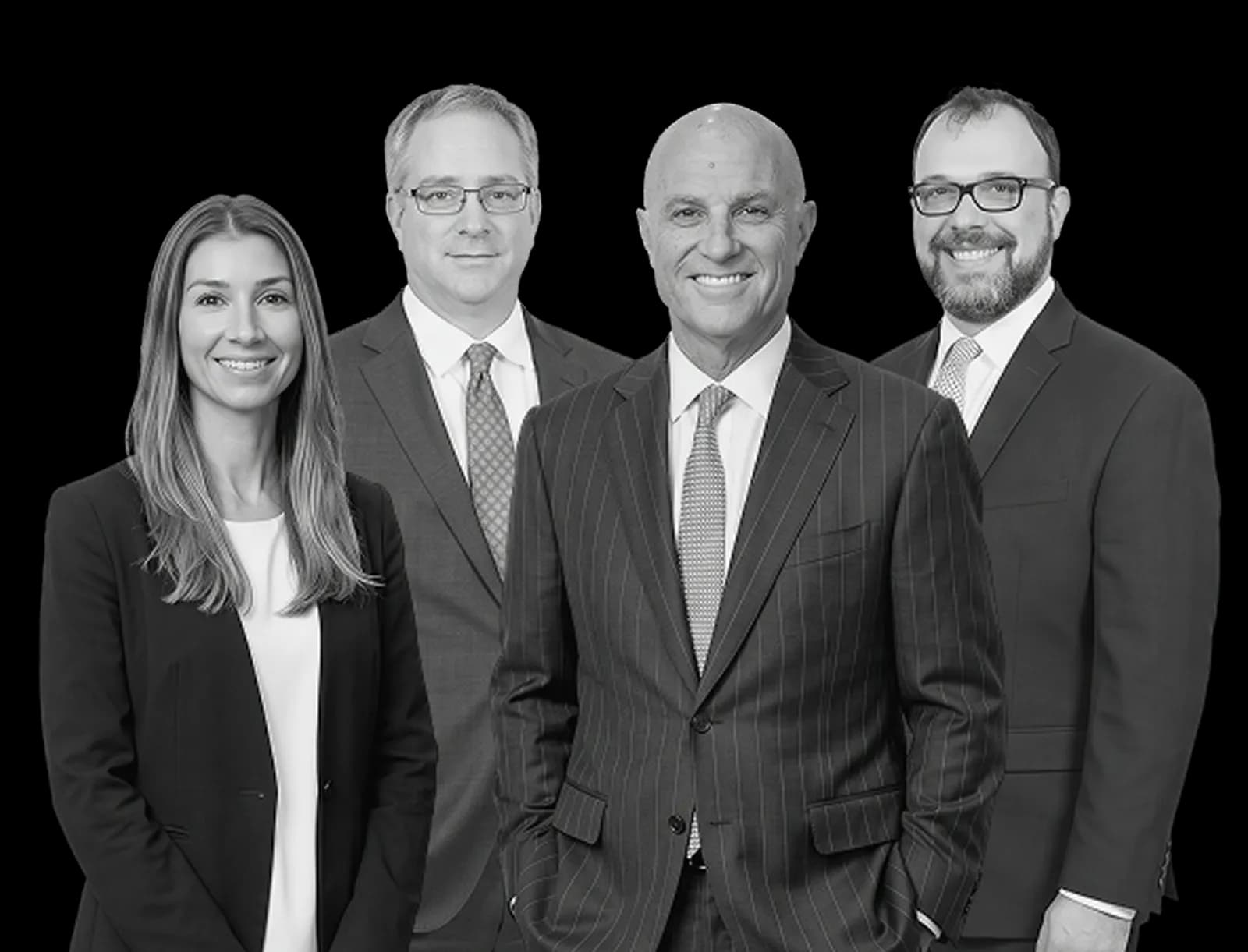
Robert S. Gianelli leads our review of denied disability claims. He received the California Lawyer Attorney of the Year (CLAY) Award and has represented policyholders in health, life, disability, and property insurance disputes. The firm has recovered hundreds of millions of dollars for policyholders. Robert S. Gianelli treats a denial letter as the insurer's version of your claim, not the final word on it. Gianelli & Morris supports that work with 40+ years serving California policyholders and an AV Preeminent® rating.
We handle bad-faith claims on contingency, which means there's no fee unless we recover for you. The first conversation is a free, confidential case review. From our Los Angeles office, we represent people throughout Los Angeles County and across California who hold individually purchased or other non-ERISA disability policies. Your policy's own terms can shorten the deadline to sue. Call 213-489-1600 so we can review your denial letter and policy before that date arrives.
Key Takeaways
- California Insurance Code § 10110.6 voids any provision in a life or disability policy covering a California resident that gives the insurer discretionary authority to decide eligibility or interpret the policy.
- Insurance Code § 790.03(h) lists unfair claims practices, but it creates no private right to sue (Moradi-Shalal v. Fireman's Fund Ins. Cos. (1988) 46 Cal.3d 287). The lawsuit is a common-law bad-faith claim.
- California courts generally apply a two-year period to bad-faith tort claims and the four-year period of Code of Civil Procedure § 337 to claims on a written policy. Individual disability policies must also include a clause (Ins. Code § 10350.11) that bars suit more than three years after written proof of loss is required, and accrual and tolling rules can change the actual date.
- Private-employer group plans are usually governed by ERISA, which generally limits recovery to benefits plus potential interest, attorney fees, and equitable relief. Gianelli & Morris does not handle ERISA-governed cases.
- An insurer's "genuine dispute" defense protects it only when its position rests on a reasonable, good-faith investigation (Wilson v. 21st Century Ins. Co. (2007) 42 Cal.4th 713).
What Is at Stake When a Disability Claim Is Denied in California?
A long-term disability denial in California does more than stop a monthly check. It can start several deadlines, raise questions about your original application, and decide which body of law controls your options. Which remedies you have depends on whether your policy is governed by California insurance law or by ERISA, and that question should be answered before you send the insurer anything else.
The financial weight of a denial
Most people buy disability coverage for the exact situation they're now in. You can't work, and you were counting on the policy to replace part of your income. When benefits stop, the mortgage, car payment, and medical bills keep coming. Some people respond by draining retirement accounts. Others go back to work before their doctors think they should, and that return can later be cited as evidence they weren't disabled after all.
Long-term disability policies also measure benefits over a defined period. Every month a wrongful denial stays in place is a month of benefits you aren't receiving. If the dispute drags on, the gap can grow into a significant sum.
Deadlines that run in the background
California courts generally apply a two-year limitations period to tort claims for insurance bad faith and the four-year period of Code of Civil Procedure § 337 to claims for breach of a written policy, commonly measured from the insurer's unequivocal denial. Those are general rules, and they aren't the whole story. Individual disability policies must also contain a clause (Ins. Code § 10350.11) that bars a lawsuit filed more than three years after written proof of loss is required, so the policy's own deadline can come before the four-year contract period. Accrual and tolling questions can also move the date. A termination letter that looks routine may be the event that starts the clock.
That's why we never estimate a filing date from the general rules. An attorney should confirm the deadline from your policy and your claim history.
When the insurer says your application was wrong
Some denials don't argue about your medical condition at all. Instead, the insurer claims you concealed or misstated something when you applied. Under California Insurance Code §§ 331 and 359, concealment or a representation that's false in a material point can entitle an insurer to rescind the policy.
Rescission means the insurer treats the policy as though it never existed and typically offers to refund premiums. If the insurer succeeds, there's no coverage to claim against. The fight then turns on the underwriting file and on whether the alleged misstatement actually mattered to the decision to issue the policy.
Why the type of policy changes your options
Here's the part that surprises many people. Two coworkers with the same diagnosis and the same insurer can have completely different legal rights. One bought an individual policy through a broker, and the other has group coverage through an employer. California's bad-faith remedies may be available to the first person. The second person's claim is usually governed by federal ERISA rules, with narrower remedies and different procedures.
If any of this sounds like your situation, gather the denial letter, the full policy, and your application before your free case review. We'll start with the question that controls everything else: which law governs your policy.
Is Your Disability Policy Governed by California Law or ERISA?
Under 29 U.S.C. § 1144, ERISA supersedes state laws that relate to an employee benefit plan, except laws that regulate insurance, and courts have held that it preempts state bad-faith claims for those plans (Pilot Life Ins. Co. v. Dedeaux (1987) 481 U.S. 41). Later Supreme Court decisions narrowed parts of Pilot Life's reasoning, but the practical result for most private-employer group disability plans remains the same: no California bad-faith tort claim. Individually purchased policies and certain other plans fall outside ERISA.
Preemption is the legal rule that a federal law can displace state law on the same subject. When ERISA preempts a claim, California's insurance bad-faith remedies generally aren't available against that plan.
How to tell which law applies
Start with how you got the coverage and who paid for it. A policy you bought yourself, outside of any employer arrangement, is generally governed by California insurance law. Coverage provided through a private employer's benefit plan is usually governed by ERISA. Some employer-related arrangements can fall outside ERISA, depending on how the coverage was set up, who paid the premiums, and what role the employer played. That's a factual question, and we screen for it at the start.
Useful documents for answering it include:
- The policy or certificate of coverage
- Your application and enrollment forms
- Premium payment records showing who paid and how
- Any plan document or summary plan description
Government and church plans
Plans sponsored by government employers and church plans are exempt from ERISA. People covered through government or church plans, such as teachers, police officers, firefighters, public employees, and religious workers, generally retain California bad-faith remedies against the insurer, though plan structure and the identity of the defendant can matter. We explain more about these differences in our article on how public employee insurance denials are different.
What we do if your plan is governed by ERISA
Gianelli & Morris does not handle ERISA-governed employee benefit cases. If your coverage came through a private employer's plan, we'll tell you so early and explain why, so you can look for other counsel promptly. ERISA has its own internal appeal procedures and deadlines, and waiting can cost you options.
| Type of Coverage | Governing Law | California Bad-Faith Tort Claim | Where Disputes Usually Go | Does Gianelli & Morris Evaluate It? |
|---|---|---|---|---|
| Individually purchased disability policy | California insurance law | Available when the facts support it | California Superior Court, subject to possible removal to federal court | Yes |
| Private-employer group plan | ERISA (29 U.S.C. § 1144) | Generally preempted (Pilot Life) | Plan's internal appeal, then federal court | No, we refer these out |
| Government employer plan | Exempt from ERISA | Generally retained against the insurer | California courts, depending on the defendant | Yes, after reviewing plan structure |
| Church plan | Exempt from ERISA | Generally retained against the insurer | California courts, depending on the defendant | Yes, after reviewing plan structure |
| Employer-related policy with limited employer involvement | Turns on how coverage was set up and paid for | Turns on the ERISA determination | Turns on the ERISA determination | We screen it first |
Promise, File, Proof: Our Six-Step Review of a Denied Disability Claim
Our review asks six questions in order: which law governs, what the policy promised, what the insurer actually did, whether the medical and vocational proof supports the denial, how the conduct measures against California standards, and which path protects your deadlines. Each answer narrows the next question. This is a description of how we evaluate a claim, not advice about any individual case, and outcomes always depend on the policy, the medical record, and the insurer's conduct.
Step 1: Confirm which law governs the policy
Everything else depends on this answer. If the policy is part of an employer benefit plan governed by ERISA, we explain why that matters and refer you out promptly. If it's an individual or other non-ERISA policy, we move forward with a California contract and bad-faith analysis.
We also note California Insurance Code § 10110.6 at this stage. It voids clauses giving the insurer discretionary authority in a life or disability policy covering a California resident, and it can matter on either path.
Step 2: Read exactly what the policy promised
Next, we identify the definition of disability the insurer applied. An own-occupation definition covers you if you can't perform the duties of your own occupation. An any-occupation definition requires that you be unable to perform any occupation, often one suited to your education, training, and experience. Many policies switch from the first to the second after a set period.
We also review the elimination period, which is the waiting period after disability begins before benefits are payable. Offsets, exclusions, riders, and amendments get the same attention. If the insurer raises a rescission theory under Insurance Code §§ 331 and 359, the focus shifts to the signed application, the underwriting file, and whether the alleged misstatement was material.
Step 3: Rebuild what the insurer actually did
California's Fair Claims Settlement Practices Regulations require a thorough, fair, and objective investigation. They also require a written first-party denial that states every basis, with its factual and legal grounds (Cal. Code Regs., tit. 10, § 2695.7). In Egan v. Mutual of Omaha Ins. Co. (1979) 24 Cal.3d 809, the California Supreme Court held that denying disability benefits without a thorough investigation breached the implied covenant of good faith.
We rebuild the timeline from the denial and termination letters, the claim file and adjuster notes, any IME, paper-review, or surveillance reports, and the correspondence log. Gaps or shifting explanations point toward a bad-faith theory. A thorough, well-explained denial points instead toward a focused dispute over benefits. Our article on failing to explain a denial covers why missing reasons matter.
Step 4: Test the medical and vocational proof
Under Wilson v. 21st Century Ins. Co. (2007) 42 Cal.4th 713, the "genuine dispute" defense protects an insurer only when its position rests on a reasonable, good-faith investigation. A jury may find bad faith when the insurer reached its medical conclusion without fairly investigating and disregarded the treating physician's evidence.
So we weigh treating-doctor opinions, functional capacity evaluations, and the actual demands of your job against the insurer's reviewers. Did they examine you? Did they see the complete records? Did they address the policy's real definition of disability? Strong treating evidence that the insurer never fairly confronted makes the defense harder to sustain. Thin or conflicting evidence means developing more medical or vocational proof before choosing a path.
Step 5: Measure the conduct against California standards
Insurance Code § 790.03(h) lists unfair claims settlement practices, including misrepresenting policy provisions and failing to promptly give a reasonable explanation for a denial. Under Moradi-Shalal, the statute creates no private right to sue. Its standards still serve as evidence of what reasonable claims handling looks like. We go deeper on this in our guide to California Insurance Code 790.03.
Punitive damages require clear and convincing evidence of oppression, fraud, or malice under Civil Code § 3294. This step decides whether to plead bad faith only or to develop a punitive damages theory as well, based on what the insurer's own records can actually prove.
Step 6: Choose the path and protect the deadlines
The options range from a pre-suit demand to a lawsuit for breach of the policy, with or without a bad-faith claim. Under Brandt v. Superior Court (1985) 37 Cal.3d 813, attorney fees reasonably incurred to recover benefits that were tortiously withheld can be recovered as damages. We weigh the strength of the proof, the available remedies, and the earliest applicable deadline.
Trial preparation shapes how we organize the evidence from the first day. Our litigation team brings substantial jury trial experience to representing policyholders in bad-faith cases. That background informs how we build a disability case so it can be proven to a jury if it gets that far.
If your disability benefits were denied or terminated, call 213-489-1600 for a free, confidential case review. Bring your denial letter, your policy, and your application. We'll start with Step 1 and tell you plainly whether your policy falls within the cases we handle.
Why Do Disability Insurers Deny or Terminate Claims in California?
Most disability denials in California turn on one of a few issues: the policy's definition of disability, the insurer's medical reviews, surveillance or activity evidence, the nature of the condition, or how benefits are calculated. Knowing which ground the insurer chose tells you what evidence will matter. It also shows whether the insurer's explanation holds together. For a broader overview, see our article on long-term disability insurance claims that get rejected.
The switch from own occupation to any occupation
Many policies pay benefits for an initial period if you can't do your own job, then require proof that you can't do any job. A termination that lands right at that transition deserves a close look. Was there new medical evidence that you improved? Or did the insurer simply apply a harder test to the same record?
Physicians, dentists, and other specialists face particular issues here, because their policies often define "occupation" around a specialty. We explain this in how disability is defined for physicians, and our article on why doctors with LTD policies face extra scrutiny covers related problems.
Independent medical exams and paper reviews
An independent medical examination (IME) is an exam by a doctor the insurer selects and pays. A paper review is an opinion from a reviewer who reads your records without ever examining you. Both are common in disability claims, and neither is automatically wrong.
But here's the catch. Under Wilson, an insurer that disregards the treating physician's evidence without a fair investigation can't hide behind a "genuine dispute." And Egan involved an insurer that denied disability benefits without having the insured examined by its own doctor or consulting his treating physicians. The questions we ask are practical ones. What records did the reviewer have, what definition of disability did they apply, and did they address your doctors' findings?
Surveillance and social media
Insurers sometimes hire investigators to film claimants or review public social media. A short video of someone carrying groceries doesn't show what happened the next day, or how long recovery took. It also doesn't show whether the activity matches the physical demands of the person's actual job.
Surveillance evidence is only as meaningful as its connection to your policy's definition of disability and to the full medical picture. When we review a termination built on surveillance, we compare the footage dates against your treatment records and your job's documented demands.
Mental health, chronic pain, and subjective symptoms
Conditions like depression, anxiety, fibromyalgia, chronic fatigue, and some pain disorders don't always appear on imaging or lab tests. Denials in these cases may claim a lack of "objective evidence." Some policies also limit benefits for mental or nervous conditions to a set period, so the label the insurer puts on your condition can change what the policy pays.
Read the policy before accepting that label. Whether the policy actually requires objective proof, and whether your condition falls under a limitation at all, are questions about contract language and medical fact.
Offsets and benefit calculations
An offset is a provision that reduces your disability benefit by other income you receive, such as Social Security Disability Insurance, workers' compensation, or certain retirement benefits. Some disputes aren't about whether you're disabled. They're about whether the insurer calculated the benefit correctly or claimed an overpayment it isn't owed.
Key insight: A well-written denial letter isn't proof the denial was correct. Under 10 CCR § 2695.7, the letter must state every basis for the denial. Comparing those stated reasons against the claim file often shows what the insurer considered and what it skipped.
How Does California Insurance Code § 10110.6 Protect Disability Policyholders?
California Insurance Code § 10110.6 makes void and unenforceable any provision in a life or disability policy covering a California resident that reserves discretionary authority to the insurer to determine eligibility or interpret the policy, or that sets standards of review inconsistent with California law. In plain terms, an insurer can't write itself a clause that says its own reading of the policy wins.
A discretionary clause is policy language stating that the insurer has discretion to decide whether you qualify for benefits and what the policy terms mean. Where such clauses are enforced, courts may defer to the insurer's decision unless it was unreasonable. Section 10110.6 removes that advantage for covered policies.
Why this matters in a disability dispute
Without a valid discretionary clause, the dispute is about what the policy actually means and what the evidence actually shows. The insurer doesn't get the benefit of the doubt simply because it made the first decision. For an individual policy governed by California law, that keeps the focus on ordinary contract principles and the insurer's duty of good faith.
The statute can also matter in ERISA cases. There, it may bear on the standard a federal court applies. Because we don't handle ERISA matters, other counsel would evaluate that issue for someone with employer-plan coverage.
Does § 10110.6 apply if my policy was issued years ago or in another state? It often does. The statute covers policies for California residents whether or not they were issued in California. It took effect on January 1, 2012 and reaches policies offered, issued, delivered or renewed after that, and a policy counts as renewed when it stays in force past its anniversary date. We check those dates during the review rather than assuming the answer.
A contrarian point about internal appeals
Many people assume the safest first move after a denial is to file the insurer's internal appeal right away. For ERISA plans, exhausting the plan's internal appeal is generally required before suing in federal court. A non-ERISA policy isn't subject to ERISA's exhaustion rule. Whatever you submit still becomes part of the insurer's file, and a rushed appeal with incomplete records or loosely worded statements can create problems later. Before you send new material on a non-ERISA claim, read the policy's appeal provisions and get advice on what to include.
Can You Sue Your Disability Insurer for Bad Faith in California?
Yes, under California law a disability insurer that unreasonably denies or delays benefits can be sued for breaching the implied covenant of good faith and fair dealing, but the claim is a common-law tort, not a lawsuit "under" Insurance Code § 790.03, and it generally isn't available against private-employer plans governed by ERISA. The question is whether the insurer acted unreasonably, not merely whether it got the answer wrong. Our article on grounds for a bad faith insurance lawsuit covers the doctrine in more depth.
What the implied covenant requires
The implied covenant of good faith and fair dealing is a duty California reads into every insurance contract. It requires the insurer not to unfairly frustrate your right to receive the benefits you paid for. In disability claims, Egan established that an insurer may not deny a claim without thoroughly investigating its basis. In that case, the California Supreme Court affirmed compensatory damages for the insured and reversed the punitive award.
Delay can matter too. An insurer that drags out a decision can face scrutiny even before a formal denial. We cover that scenario in can you sue your insurance company for taking too long. For disability income policies, Insurance Code § 10111.2 requires payment within 30 calendar days after the insurer has all the information it needs. If it doesn't have that information within 30 days of the claim, it must send a written list of what it still needs, and without that notice, interest at 10 percent a year begins on the 31st day.
The genuine dispute defense
The genuine dispute doctrine allows an insurer to avoid bad-faith liability when it denied a claim based on a reasonable, good-faith disagreement about coverage or the amount owed. Wilson limits that defense. It applies only when the insurer's position rests on a reasonable, good-faith investigation. An insurer that ignored the treating physician's evidence and failed to investigate fairly can't claim a genuine dispute simply because it hired a reviewer who disagreed.
Where § 790.03 fits
Insurance Code § 790.03(h) describes unfair claims settlement practices when done knowingly with such frequency as to indicate a general business practice. Examples include misrepresenting pertinent facts or policy provisions, failing to adopt reasonable standards for prompt investigation, not attempting in good faith to settle when liability has become reasonably clear, and failing to promptly explain the basis for a denial.
The California Department of Insurance enforces § 790.03, and Moradi-Shalal holds that policyholders can't sue under it directly, but its standards remain relevant evidence of reasonable claims handling. That distinction shapes how we plead a case and what we look for in discovery.
What bad faith doesn't mean
A bad-faith claim doesn't require proof that an adjuster intended to harm you. It also isn't proven just because the insurer reached a different medical conclusion than your doctor. The focus is on the process: what the insurer knew, what it investigated, what it ignored, and whether its stated reasons line up with its own file.
What Damages Are Available After a Wrongful Disability Denial?
For a California policy outside ERISA, a wrongful denial can support recovery of unpaid benefits under the contract and, if bad faith is proven, tort damages that may include emotional distress, Brandt fees, and in limited cases punitive damages; for private-employer ERISA plans, recovery is generally limited to the benefits due plus potential interest, attorney fees, and appropriate equitable relief. The difference between those two lists is often the most important fact in a disability case. Our article on remedies for bad faith insurance practices explains these categories further.
| Type of Recovery | California Non-ERISA Policy | Private-Employer ERISA Plan | Controlling Authority |
|---|---|---|---|
| Unpaid policy benefits | Recoverable for breach of the written policy | Recoverable as benefits due under the plan | Code Civ. Proc. § 337 contract claim; 29 U.S.C. § 1132(a)(1)(B) |
| Interest on withheld benefits | May be recoverable as part of contract damages | Potentially available at the court's discretion | California contract law; federal ERISA case law |
| Emotional distress damages | May be recoverable on a proven bad-faith tort claim | Not available | California bad-faith case law; ERISA preemption |
| Attorney fees | Brandt fees for recovering tortiously withheld benefits | Court may award reasonable fees | Brandt v. Superior Court(1985); 29 U.S.C. § 1132(g) |
| Punitive damages | Only on clear and convincing evidence of oppression, fraud, or malice | Not available | Civ. Code § 3294; Pilot Life(1987) |
| Equitable relief | Depends on the claims pleaded | Appropriate equitable relief may be available | 29 U.S.C. § 1132(a)(3) |
Brandt fees and why they matter
Brandt fees are the attorney fees you reasonably incur to compel payment of policy benefits that the insurer tortiously withheld, which California treats as damages caused by the bad faith. The rule comes from Brandt v. Superior Court, a case that itself arose from a denial of disability benefits. Fees for pursuing the bad-faith claim itself aren't included. In practice, Brandt fees can help put back the portion of your benefits that would otherwise go to legal fees.
Emotional distress and punitive damages
California courts have long allowed emotional distress damages in bad-faith cases. The firm's discussion of Crisci v. Security Insurance Company explains one of the foundational decisions. Punitive damages are a different matter. Civil Code § 3294 requires clear and convincing evidence of oppression, fraud, or malice. Egan itself shows how demanding that standard is, since the Supreme Court reversed the punitive award there.
The ERISA carve-out
Private-employer group plans are preempted by ERISA, so there's no bad-faith tort, no punitive damages, and no emotional distress damages; recovery is generally limited to the benefit plus potential interest, attorney fees under 29 U.S.C. § 1132(g), and appropriate equitable relief under § 1132(a)(3). Government and church plans are exempt from ERISA and generally retain California bad-faith remedies against the insurer, although plan structure and the defendant can affect that analysis.
Lump-sum resolutions
Some disability disputes end with a negotiated lump-sum payment in exchange for closing the claim, sometimes called a buyout. Whether that makes sense depends on the remaining benefit period, your health outlook, any offsets, the strength of the bad-faith evidence, and tax consequences you should review with a tax professional. A lump sum isn't automatically better or worse than ongoing benefits. It's a trade, and you should understand both sides of it before signing.
SSDI vs. Group LTD vs. Individual Disability Policies: How Do They Compare?
Social Security Disability Insurance, employer group long-term disability coverage, and individual disability policies are three separate systems with different definitions of disability, different dispute paths, and different remedies, so an approval or denial in one doesn't decide the others. Many people hold two or even all three, which is why the offset clause in an LTD policy deserves careful reading.
| Feature | SSDI | Group LTD Through a Private Employer | Individual or Other Non-ERISA LTD Policy |
|---|---|---|---|
| Who decides the claim | Social Security Administration | Plan administrator or insurer | The insurer |
| Governing law | Federal Social Security Act (42 U.S.C. § 423) | ERISA | California insurance law for California policies |
| Definition of disability | Inability to engage in substantial gainful activity due to a long-lasting impairment | Set by the plan, often own occupation then any occupation | Set by the policy, often own occupation for specialists |
| Waiting period | Five-month statutory waiting period | Elimination period stated in the plan | Elimination period stated in the policy |
| Dispute path | Social Security's administrative appeals, then federal court | Internal plan appeal, then federal court | Demand or lawsuit, typically filed in California Superior Court |
| Bad-faith tort remedies | Not applicable | Generally preempted | Available when the facts support them |
How SSDI and LTD interact
Many long-term disability policies require claimants to apply for Social Security benefits and reduce the monthly LTD payment by any SSDI received. If SSDI is later awarded retroactively, the insurer may claim an overpayment. Check whether your policy's offset language actually supports the amount the insurer is claiming.
Does an SSDI approval help an LTD claim?
It can. Social Security's definition requires an inability to engage in any substantial gainful activity, which is a demanding test. An approval isn't binding on a private insurer, but it can be relevant evidence, especially when the insurer accepted the SSDI offset while denying that you were disabled. When an insurer reduces your benefit because of an SSDI award and denies disability on the same record, that inconsistency belongs in the analysis of whether its investigation was fair.
Individual policies and California remedies
Individual policies, often bought by physicians, dentists, attorneys, and business owners, are where California law offers the broadest remedies. That's also where we focus. If your coverage came through work, the comparison table above shows why the first question we ask is about ERISA.
How Long Do You Have to Sue After a Disability Denial in California?
California courts generally apply a two-year limitations period to bad-faith tort claims and four years under Code of Civil Procedure § 337 to claims for breach of a written insurance policy, commonly measured from the insurer's unequivocal denial, but a contractual suit-limitation clause in the policy, along with accrual and tolling rules, can shorten or shift that deadline. No single date applies to everyone. That's why an attorney should calculate yours from the actual policy and claim history.
Why there's no universal deadline
Disability claims often involve a series of letters: a request for more records, a partial approval, a termination, an appeal decision. Which letter counts as the "unequivocal denial" can be disputed. Policies can also contain their own limits on when you may sue. And because benefits are paid monthly, some disputes involve questions about how each missed payment is treated.
Does filing an internal appeal stop the limitations clock? Don't assume it does. Tolling depends on the policy language and the facts, and the answer can differ between the contract claim and the bad-faith claim. Get the deadline confirmed by an attorney before relying on any appeal to protect it.
Your first three steps
- Collect the paper. Get the complete policy with riders and amendments, your signed application, every denial or termination letter, and your correspondence with the insurer.
- Request the claim file. Ask the insurer in writing for your complete claim file, including medical reviews and any surveillance reports.
- Hold off on new submissions. Before you send an appeal letter, a recorded statement, or new forms on a non-ERISA claim, have an attorney review what you plan to say.
How long a disability denial case takes
We don't publish month-by-month estimates, because no supported figure applies across policies and courts. Timing depends on factors you can identify early: whether the insurer reconsiders after a demand, how complete the medical record is, whether additional medical or vocational evidence must be developed, whether the insurer removes the case to federal court, how discovery into the claim file proceeds, and the court's calendar.
| Phase | What Happens | Governing Rule or Key Document | What Affects Timing |
|---|---|---|---|
| Claim decision | Insurer pays or denies the claim | Payment within 30 calendar days after the insurer has all needed information, or a written list of what it still needs (Ins. Code § 10111.2) | Completeness of the proof of claim |
| Denial review | We read the policy, application, and denial letter | Written denial stating every basis (10 CCR § 2695.7) | How quickly the policy and claim file are obtained |
| Evidence development | Treating opinions, functional evaluations, vocational analysis | Policy definition of disability | Medical appointments and availability of records |
| Demand or filing | Pre-suit demand or complaint for breach and bad faith | Earliest applicable limitations date | Insurer's response and the deadline that applies |
| Litigation | Discovery into claim handling, depositions, motions | California Code of Civil Procedure | Removal to federal court, discovery disputes, court calendar |
| Resolution or trial | Settlement, mediation, or verdict | Damages available under the governing law | Strength of the proof and the court's trial schedule |
Verified Results From Gianelli & Morris Insurance Litigation
The results below are verified outcomes from insurance cases the firm has litigated against major insurers, and they show the firm's trial and class-action experience rather than predicting what any disability claim will be worth. None of the matters listed is presented as a long-term disability verdict. They involve health coverage, annuities, and claims handling, and each one shows the kind of claim-file and policy analysis that disability disputes also require.
| Case | Type of Dispute | Verified Result |
|---|---|---|
| Gallimore v. Kaiser Foundation Health Plan | Class action over California reconstructive surgery law | Class action trial victory with estimated benefits exceeding $150 million |
| LaRue v. Accountable Health Care IPA | Failure to provide a timely surgical referral | $7.2 million jury verdict |
| Arce v. Kaiser Foundation Health Plan | Class action over denial of autism treatment | Class action for denial of autism treatments |
| Trujillo v. United Health Group | Class action over prosthetic limb coverage | Class action representing consumers denied prosthetic limb coverage |
What these cases have in common with disability claims
Every case above required proving what an insurer's own documents showed about how it made decisions. Disability bad-faith cases rest on the same kind of proof: what reviewers saw, what the adjuster's notes say, and whether the stated reasons line up with the file. Past results don't guarantee a future outcome, and each disability claim turns on its own policy, medical record, and insurer conduct.
Recognition behind the work
Robert S. Gianelli received the CLAY Award, was twice named a Consumer Attorney of the Year Finalist, and is a Consumer Attorneys of California Street Fighter of the Year honoree, a single honor he shares with a colleague at the firm. You can read more about the CLAY Award recognition on our site. The firm has represented California policyholders since 1979.
Litigating a Disability Denial in Los Angeles: Courts and Agencies
A lawsuit over a California disability policy is generally filed in California Superior Court, and in downtown Los Angeles civil insurance litigation is venued at the Stanley Mosk Courthouse, 111 N. Hill St., though the specific courthouse and department for any case appear on the case notice and assignment, not on a general rule. An insurer sued in state court may also try to move the case to federal court, which changes the procedures and the judge.
The Stanley Mosk Courthouse and case assignment
Civil cases in central Los Angeles proceed through the Los Angeles County Superior Court's civil courthouse on North Hill Street. Once a case is filed, the court assigns it to a department and judge, and that assignment controls where hearings take place. If you've already received court papers, look at the notice for your assigned department rather than assuming a location. Court rules and self-help information are available through California Courts. Criminal courthouses in the same area, such as the Clara Shortridge Foltz Criminal Justice Center, don't hear civil insurance cases.
Removal to federal court
Many disability insurers are incorporated or headquartered outside California. When an out-of-state insurer is sued in state court, it may seek to remove the case to federal court based on diversity of citizenship. California law still governs the policy and the bad-faith claim after removal, but federal procedural rules apply. We plan for that possibility when we prepare a complaint.
The California Department of Insurance
The California Department of Insurance enforces the claims-handling standards in Insurance Code § 790.03 and the Fair Claims Settlement Practices Regulations. Policyholders can submit complaints to the department. A complaint is not a substitute for a lawsuit, and it doesn't preserve your limitations deadline, but the department's standards remain relevant evidence of what reasonable claims handling looks like.
Statewide representation from Los Angeles
We're headquartered in Los Angeles and represent policyholders throughout Los Angeles County and across California. A disability policy dispute doesn't depend on where you were treated or where you live within the state. It depends on the policy, the claim file, and the law that governs both.
What Does a California Long-Term Disability Denial Attorney Cost?
Gianelli & Morris handles bad-faith claims on contingency, meaning you pay no attorney fee unless we recover for you, and the first meeting is a free, confidential case review. How case expenses are handled is spelled out in the written agreement before work begins, so you know the terms in advance. If Brandt fees are recovered in a bad-faith case, they can offset part of the fees attributable to recovering withheld benefits.
What happens at your free case review
We start by asking how you got the coverage and who paid for it, because that answers the ERISA question. If your policy is governed by ERISA, we'll tell you right away and explain why we don't handle it. If it's an individual or other non-ERISA policy, we'll look at the denial letter, the definition of disability the insurer applied, and the deadlines that may apply. You'll leave knowing whether your policy falls within the cases we take and what the next step would be.
What to bring
- The complete policy, including riders and amendments
- Your signed application
- Every denial, termination, or benefit-reduction letter
- Correspondence with the insurer, including any requests for records
- A list of your treating doctors and recent records you have on hand
- Any SSDI decision or other benefit award that affects offsets
Who you'll be working with
Robert S. Gianelli is admitted to the California Bar, and you can confirm any California lawyer's license status through the State Bar of California. Our practice is limited to insurance disputes on behalf of policyholders, covering health, life, disability, long-term care, annuity, and commercial claims. That focus means the questions in this guide are the same ones we work through every day for people across California.
The information on this page is for general informational purposes and does not constitute legal advice. Every case is different, and past results do not guarantee future outcomes. Please consult a qualified attorney about your specific situation.
Your policy's suit-limitation clause and California's limitations periods can begin running from the date of an unequivocal denial, so the date on your denial letter matters. Call Gianelli & Morris at 213-489-1600 for a free, confidential review of your long-term disability denial. We represent policyholders in Los Angeles County and throughout California, and we'll tell you plainly whether your policy is one we can take on.
Frequently Asked Questions
How much does it cost to hire a long-term disability denial lawyer at Gianelli & Morris?
We handle bad-faith claims on contingency, so you pay no attorney fee unless we recover for you. The first consultation is a free, confidential case review, and the written agreement explains how case expenses are handled before any work begins. In California bad-faith cases, Brandt fees may also be recoverable for the cost of recovering withheld benefits.
To schedule a review, call 213-489-1600.
How long do I have to file a lawsuit after my disability claim is denied in California?
California courts generally apply a two-year period to bad-faith tort claims and four years under Code of Civil Procedure § 337 to claims on a written policy, usually measured from the insurer's unequivocal denial. Your policy can contain its own suit-limitation clause, and accrual and tolling rules can shift the date. Have an attorney confirm your specific deadline instead of estimating it from general rules.
My disability coverage came through my job. Can you help?
Probably not, and we'll tell you why right away. Most private-employer group plans are governed by ERISA, which generally preempts California bad-faith claims and limits recovery to benefits plus potential interest, attorney fees, and equitable relief. Gianelli & Morris does not handle ERISA cases, so we refer those matters out promptly. Government and church plans are exempt from ERISA and generally retain California remedies, so those are worth discussing with us.
What is my disability denial case worth?
No one can responsibly give a number without reviewing your policy and claim file. Value depends on the monthly benefit, the remaining benefit period, offsets, and whether the evidence supports bad-faith damages such as emotional distress, Brandt fees, or, on clear and convincing proof under Civil Code § 3294, punitive damages. For ERISA plans, recovery is generally limited to benefits plus potential interest, fees, and equitable relief.
Should I accept a lump-sum buyout or settlement offer from the insurer?
Not before you understand what you're giving up. A lump sum usually ends your right to future monthly benefits and any related claims, so it should be compared against the remaining benefit period, your health outlook, offsets, and the strength of any bad-faith evidence. Tax consequences also matter, so talk with a tax professional before signing.
The insurer says I misstated something on my application. What does that mean?
The insurer may be trying to rescind the policy under California Insurance Code §§ 331 and 359, which allow rescission for concealment or a misrepresentation that is false in a material point. Rescission treats the policy as void from the start. The key questions are what the application actually asked, what the underwriting file shows, and whether the alleged misstatement was material to the decision to issue coverage.
Can my insurer deny my claim based on a doctor who never examined me?
Insurers can use paper reviews, but California law limits how much weight they carry. Under Wilson v. 21st Century Ins. Co. (2007), the "genuine dispute" defense protects an insurer only when its position rests on a reasonable, good-faith investigation, and a jury may find bad faith when the insurer disregarded the treating physician's evidence. What the reviewer saw and which disability definition they applied both matter.
How long does a long-term disability denial case take to resolve?
There's no reliable average, because timing depends on the facts. The factors include whether the insurer reconsiders after a demand, how complete the medical record is, whether more medical or vocational evidence must be developed, whether the case is removed to federal court, and the court's calendar. We explain the factors in your case at the review rather than quoting a generic timeline.
Do I need a lawyer to challenge a disability denial in California?
You aren't required to have one, but the decisions made early can affect your options later. Which law governs the policy, what you submit in an appeal, and which deadline applies are legal questions with lasting effects. A lawyer can review the claim file against 10 CCR § 2695.7 and California bad-faith law before you send the insurer anything new.
Will my disability case go to trial?
Some cases resolve after a demand or during litigation, and others go to trial. That depends on the evidence, the insurer's position, and the remedies at stake. We prepare cases from the start as though they may need to be proven to a jury, but no one can promise whether a particular case will settle or be tried.
How do I pay for medical treatment while my disability case is pending?
Disability benefits replace income, so treatment costs usually run through your health coverage, Medi-Cal, or other benefits during the dispute. Keeping up with treatment matters, because ongoing records from your doctors are often central evidence in a disability claim. If your health insurer is also denying care, raise that at your case review, since it may be a separate claim.
Does an SSDI approval mean my LTD insurer has to pay?
No. A Social Security approval isn't binding on a private disability insurer, but it can be relevant evidence, because Social Security requires an inability to engage in substantial gainful activity. If your insurer reduced your benefit because of the SSDI award while also denying that you're disabled, that inconsistency can matter when evaluating whether its investigation was fair.